



For Victor Goines, jazz is a way of life.
A distinguished musician, composer and educator, Goines has been named the new president and CEO of Jazz St. Louis. The nonprofit organization, which boasts an intimate jazz performance space in St. Louis’ Grand Center Arts District, is dedicated to the preservation and advancement of the uniquely American musical genre.
Goines was recommended for the Jazz St. Louis position by the legendary trumpeter Wynton Marsalis. His impressive résumé includes more than 200 original works as a composer, and as a performer, he appears on numerous film scores, including Jazz, a documentary by Ken Burns. A longtime member of the Jazz at Lincoln Center Orchestra, Goines has also performed with Bob Dylan, Dizzy Gillespie, Diana Ross, Chucho Valdés and Stevie Wonder, among other top names in music.
“I’ve been lucky enough to travel the world and bring jazz – this great art form that I believe in, that I’ve been celebrating all my life – to people near and far,” Goines says. “As a jazz performer, educator and consumer, I’ve not only been able to celebrate the music, but I’ve also been able to interact with people in the industry – I could give a roll call of people if we had time. Not everyone has the opportunity to form those bonds, and I think that’s one of the greatest achievements of my professional life so far.”
When asked what drew him to jazz instead of another musical genre, the acclaimed jazz saxophonist and clarinetist didn’t have to think about it. “It’s the music that moves me,” he says. “I studied classical music, and there was a time when my aspiration was to be a classical clarinetist in a major symphony orchestra somewhere in the world. But then I heard jazz, and [my passion] shifted. I still love classical music, but jazz allows me the greatest freedom of expression. To me, [jazz] means the unexpected, and I love the unexpected; it means every day is a learning experience.”
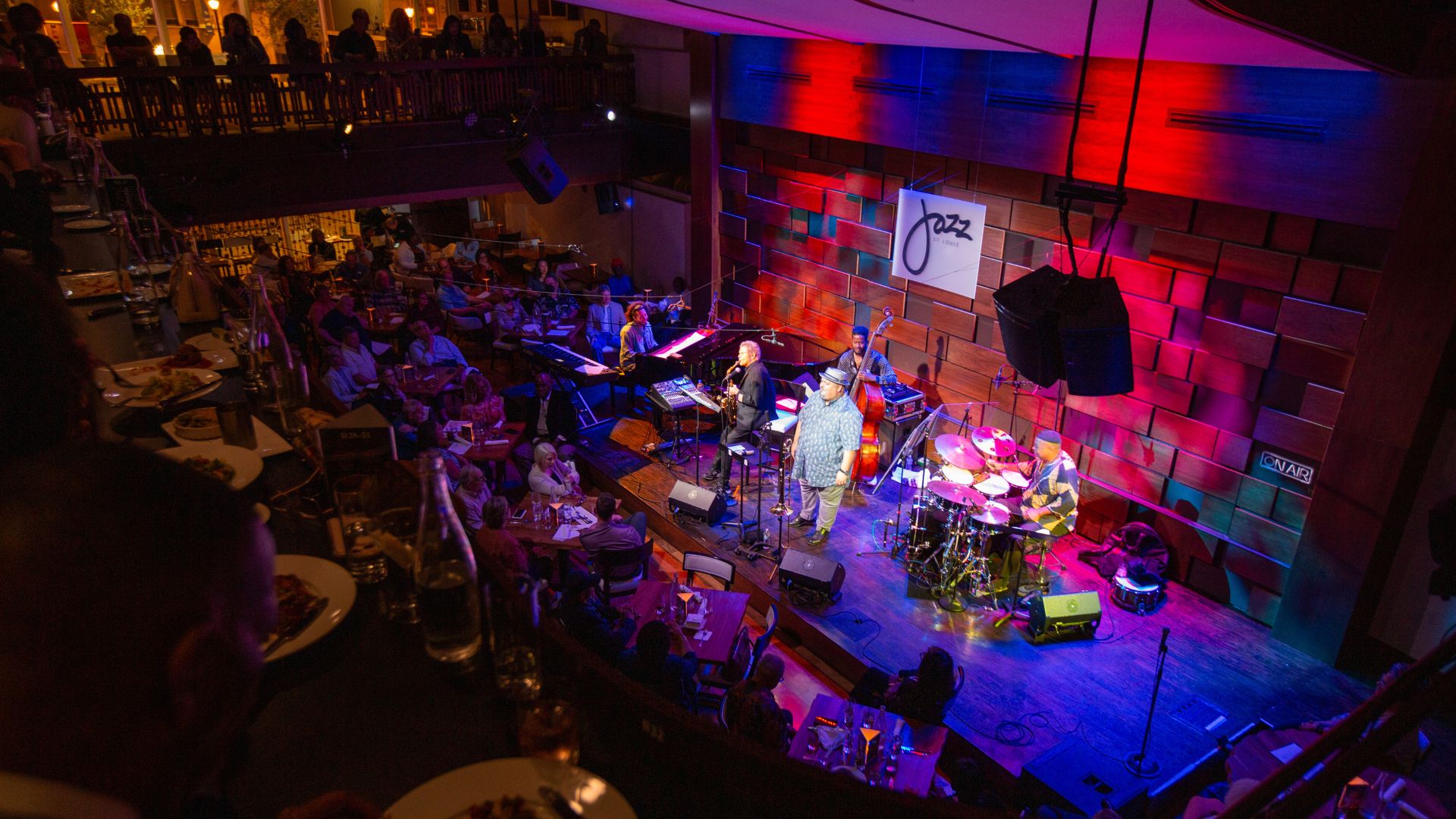
Originally called Jazz at the Bistro, Jazz St. Louis began as a music series, presenting jazz musicians of national and international fame to small but rapt audiences. When founder Barbara Rose died in 1998, Gene Dobbs Bradford was chosen to lead the organization, and he began expanding the musical styles presented by the club and building the education and community programs that are now an integral part of the organization.
“I’ve been around Jazz St. Louis for a while, though not in a day-to-day setting. … I’ve seen it start as a seed and blossom into this beautiful flower,” Goines says. “Becoming a part of it from a leadership position gives me the opportunity to build on the foundation set by Gene Dobbs Bradford and take it to the next level.”
Although Goines isn’t ready to share all the details of his vision and plan, it’s clear that he won’t stop until Jazz St. Louis is world-renowned.
Along the way, he wants to honor the mission of Jazz St. Louis: to spotlight unique and diverse jazz performers, preserve the shared cultural heritage embodied in jazz music and activate the local community. “The community is an important part of Jazz St. Louis,” Goines says. “Jazz is alive here, and I want to find new ways to convey what the community has to offer; we want people to see this city for what it is.”
“As we look to the future of Jazz St. Louis, we are thrilled to have [Goines] at the helm with his extensive knowledge and connections to the jazz world,” Bill Higley, chair of the Jazz St. Louis Board of Directors said in a recent press release. “His career in education and his history of building programs with such storied institutions as Northwestern University and The Juilliard School puts him in the perfect place and time in JSL’s trajectory.”
Ultimately, Goines wants Jazz St. Louis to thrive. “Jazz St. Louis is in a very positive place right now,” he says, “and I only hope to continue the impressive progress that it’s made [since its inception in 1995].”